MIA — Artificial Intelligence Engine
Senior UX/UI Designer at Imaginamos for Grupo Bolívar (2023–2024). Revolutionizing the Colombian real estate market through conversational AI and data-driven matching.
CLIENT
Ciencuadras
ROLE
Lead Designer
TIMELINE
8 Months
SERVICE
IA Real Estate Strategy
There has been an increase in effective leads compared to legacy search engines.
HISTORIC MILESTONE
First AI sales in Grupo Bolívar's history

Context and Problem
Ciencuadras faced three critical challenges: the traditional search engine did not segment users correctly, high volumes of leads were captured but had a low effective conversion rate, and the business needed to incorporate AI as a real competitive advantage. MIA was created as a strategic response from the Bolívar Group’s management.
Inefficient Search
Users couldn't find what they actually needed using the old filters.
Low Conversion Rate
Qualified traffic was wasted due to a lack of personalization.
AI Latency
The company needed a first-to-market AI strategy.
01. Discovery & Research
I drew on four sources to gain a thorough understanding of the problem:
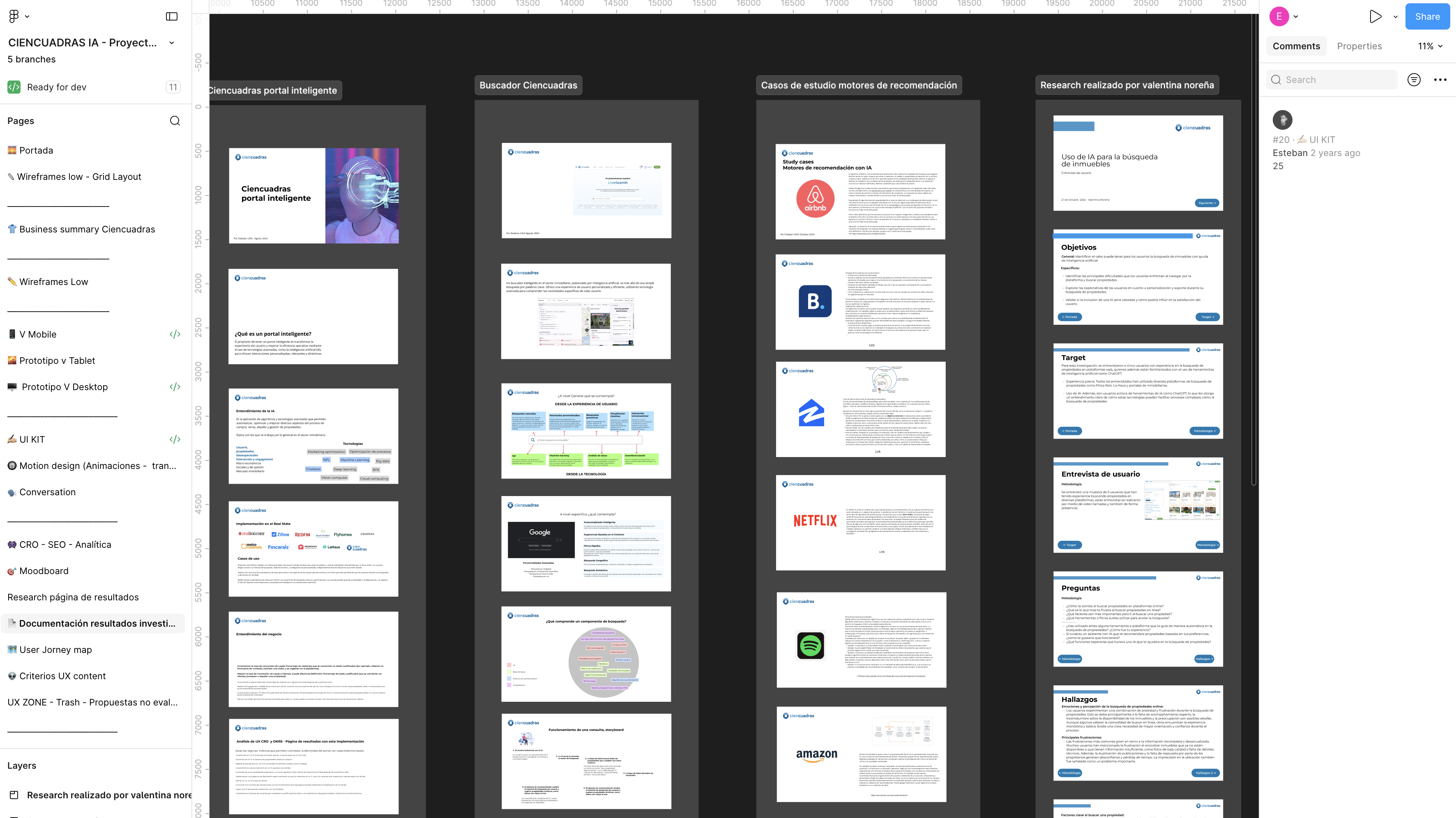
User Interviews
search patterns and drop-off points
Behavioral Analysis
session data, clicks, and conversions
Competitive Benchmark
Local and international leaders in proptech and AI
Workshops with stakeholders
Alignment of objectives between business, product, and technology
Problem Definition
"How can we automatically match the right user with the right property, before the user even knows they're looking for it?"
Success criteria defined in terms of the product and the business:
- check_circle Increase Effective Leads
- check_circle Reduce the user's decision-making time
- check_circle Enable and optimize AI-driven operations
sOLUTION
MIA’s design strategy was guided by a core OKR: to increase the rate of qualified leads through AI-driven hyper-personalization. Every design decision was backed by real data: I used Google Analytics and Microsoft Clarity to identify drop-off patterns, bounce rates, and in-session behavior, supplemented by reports from the data science team on lead quality and conversion.
Data-Driven Approach
The KPIs I monitored directly—effective lead rate, lead-to-sale conversion rate, session duration, retention, and bounce rate—served as validation criteria in each iteration, ensuring that changes to the interface had a measurable impact on the business funnel and not just on the perceived experience.
ANALYTICS
Google Analytics
BEHAVIOR
Microsoft Clarity
Design
From wireframe to high-fidelity prototype in three phases: conceptual exploration, validation with real users, and iteration with the data team to tailor the retargeting logic to the interface.
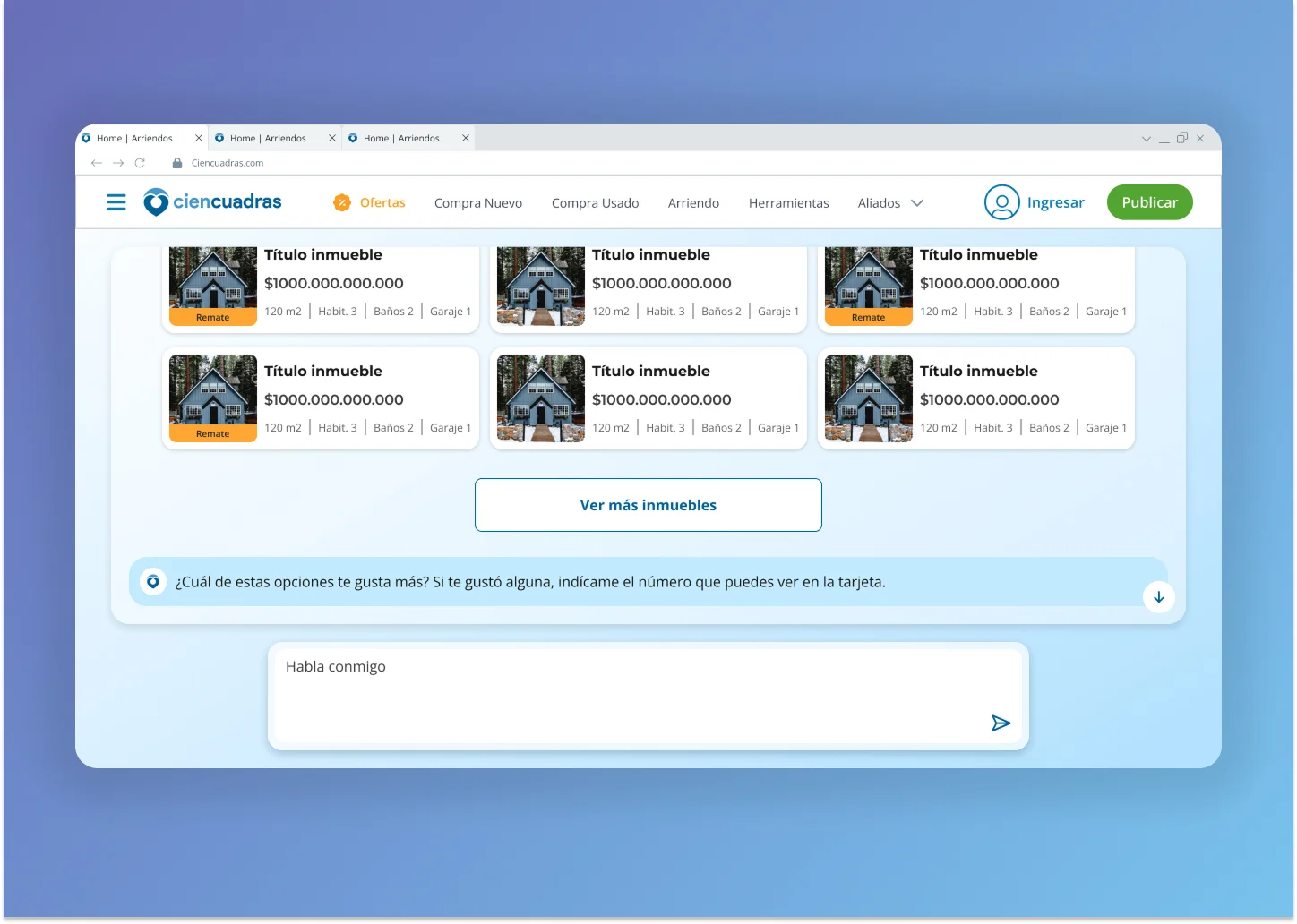
Exploring the user journey and aligning the team on how to turn intent into actionable recommendations.
Testing
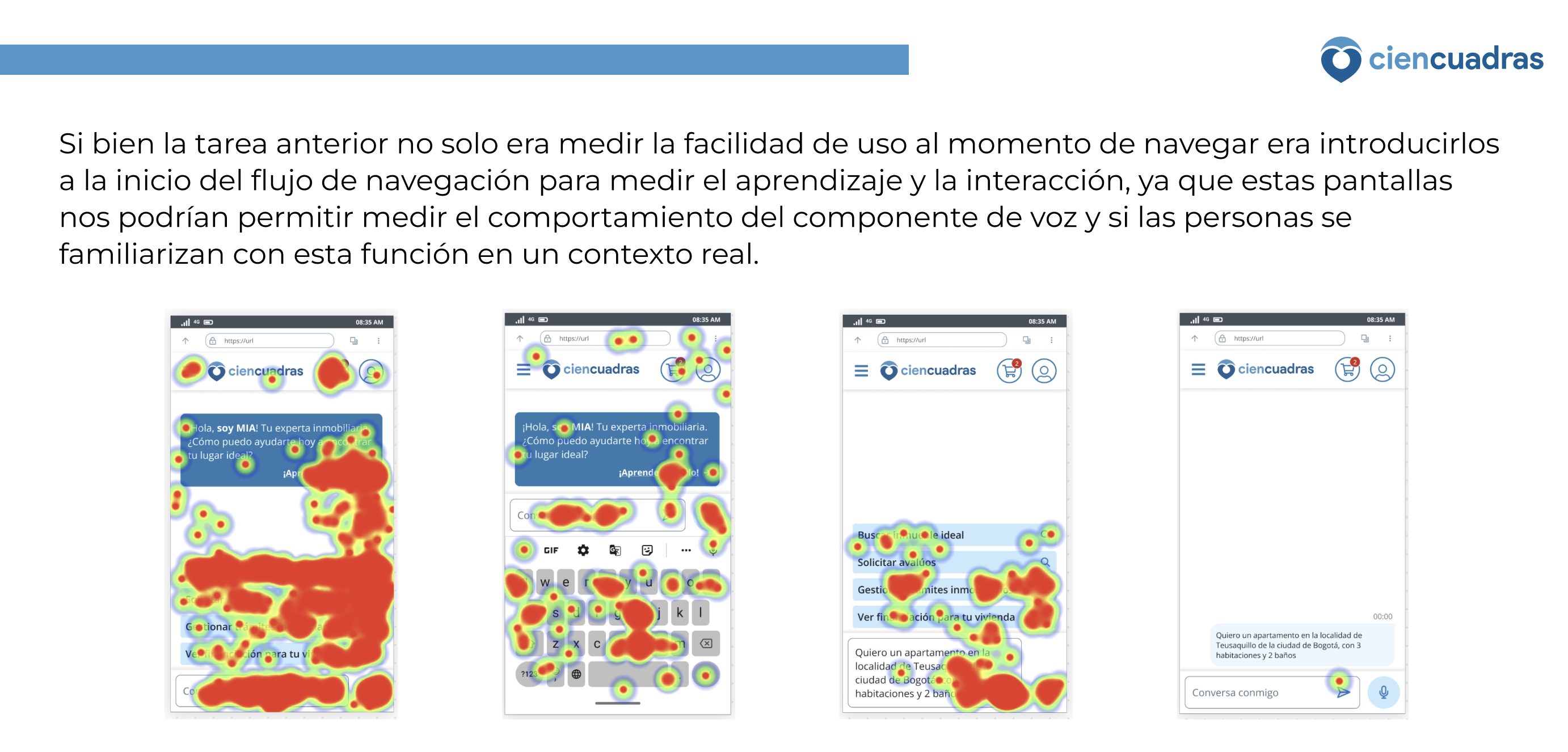
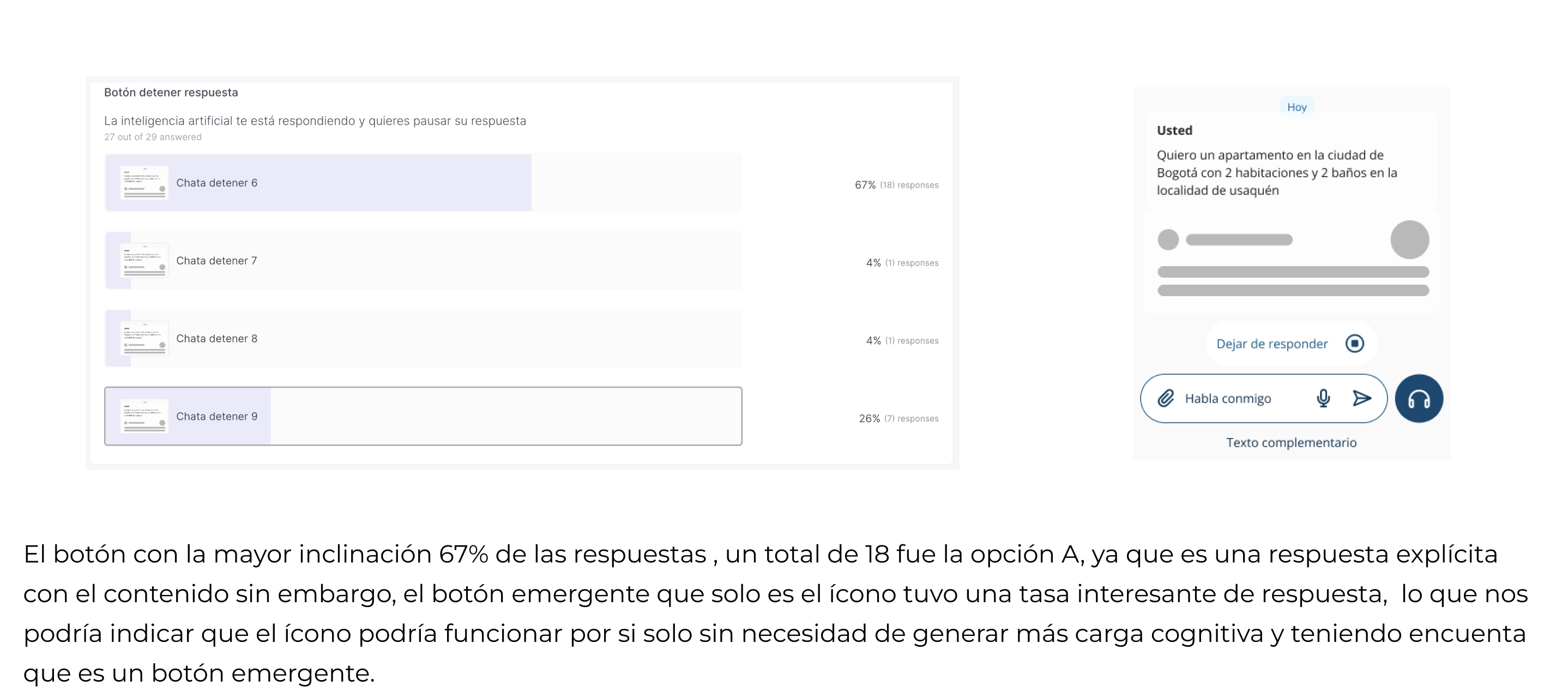
To ensure the effectiveness of the AI Engine, we conducted extensive usability testing and real-time data analysis. This allowed us to validate user intent and optimize the conversational flow based on actual behavior.
Heat Map & Eye-Tracking Analysis
A/B Testing & Metrics
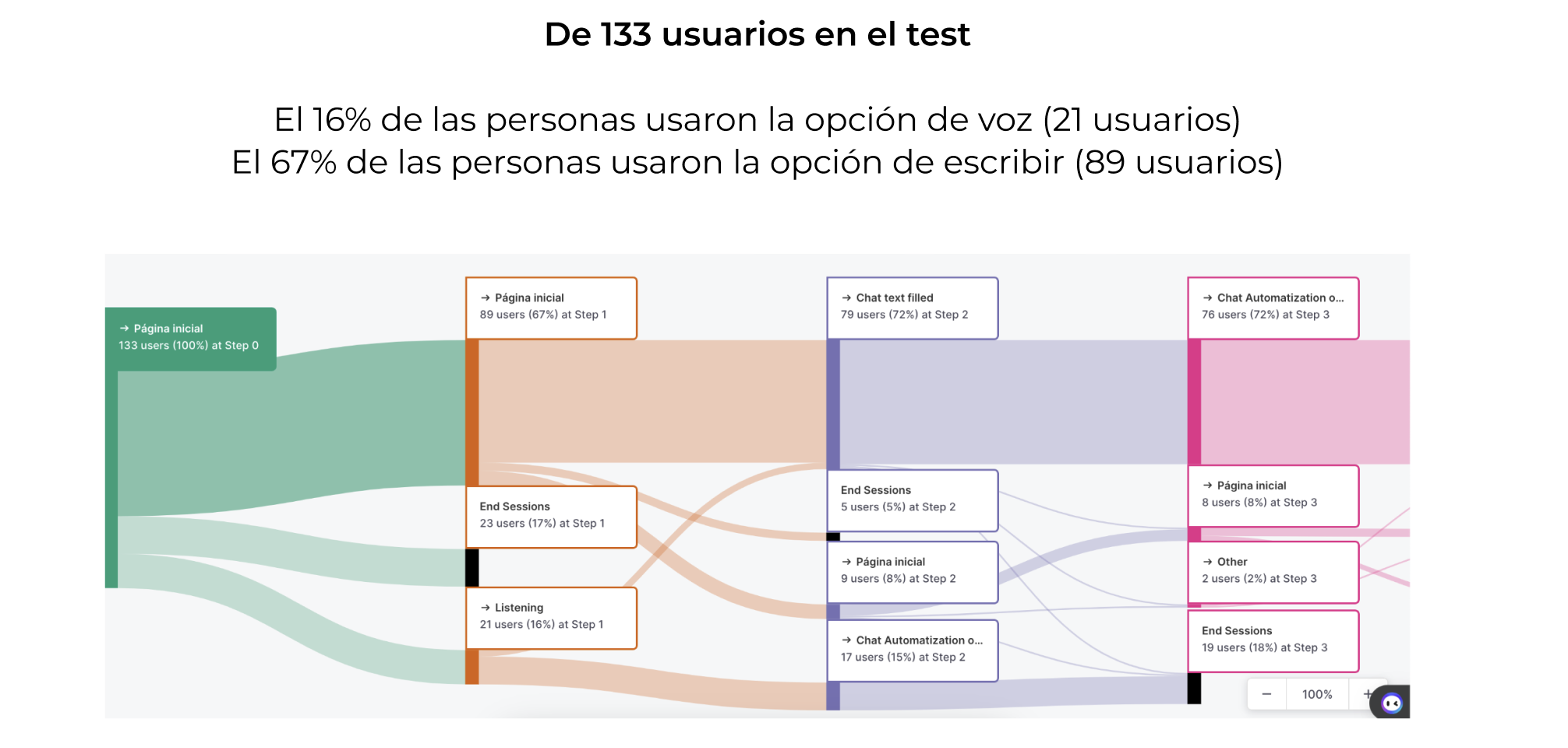
User Flow & Conversion Path
Key Insights
Insight: The problem wasn't the inventory; it was the system's inability to match the right user with the right property.
Insight: The friction wasn't in the search itself; it was in the final step. Designing that moment was critical.
Insight: The user wanted control because the system didn't demonstrate intelligence. MIA had to earn that trust through relevance, not by offering more options.
Insight: Hyper-personalization doesn't just improve conversion—it builds user habit.
Insight: Good AI design doesn't just optimize the user experience—it optimizes the entire system around it.
Results
Increase in the conversion rate for leads compared to traditional search.
An AI-driven milestone in the history of Grupo Bolívar.
Daily active conversations within the first month of launch.
User satisfaction score (CSAT) for the conversational flow.
Lead Efficiency Growth
Legacy Search vs. MIA AI Engine (Mar–Nov 2024)
MIA achieved sustained growth of 70% following the initial learning phase.
Learning and Reflection
"Designing for AI isn't about designing the AI itself—it's about designing the user's trust in it. The most valuable challenge was learning how to facilitate conversations between very different profiles and turn that tension into clear design decisions."
Esteban ui